Mathematical structure
Canonical equations, explicit assumptions, status labels, symbolic checks, and formal-support mappings define what the theory actually claims.
Controls Engineer · Independent Researcher · Software Developer
Papers, equations, simulations, experiments, open-data analyses, and computational extensions organized so new readers can find the central idea before entering the full corpus.
The research idea
Wave Confinement Theory is a proposed geometric wave framework in which localized physical structure arises from sustained oscillation, finite-wavenumber selection, phase organization, curvature feedback, and topology.
Energy and phase propagate through a field.
A preferred spectral shell suppresses unrestricted growth.
Boundary and feedback conditions organize persistent modes.
Phase, geometry, and topology stabilize localized structure.
Visual guide
The strongest visuals are used as orientation or technical figures, with their evidentiary role stated explicitly.
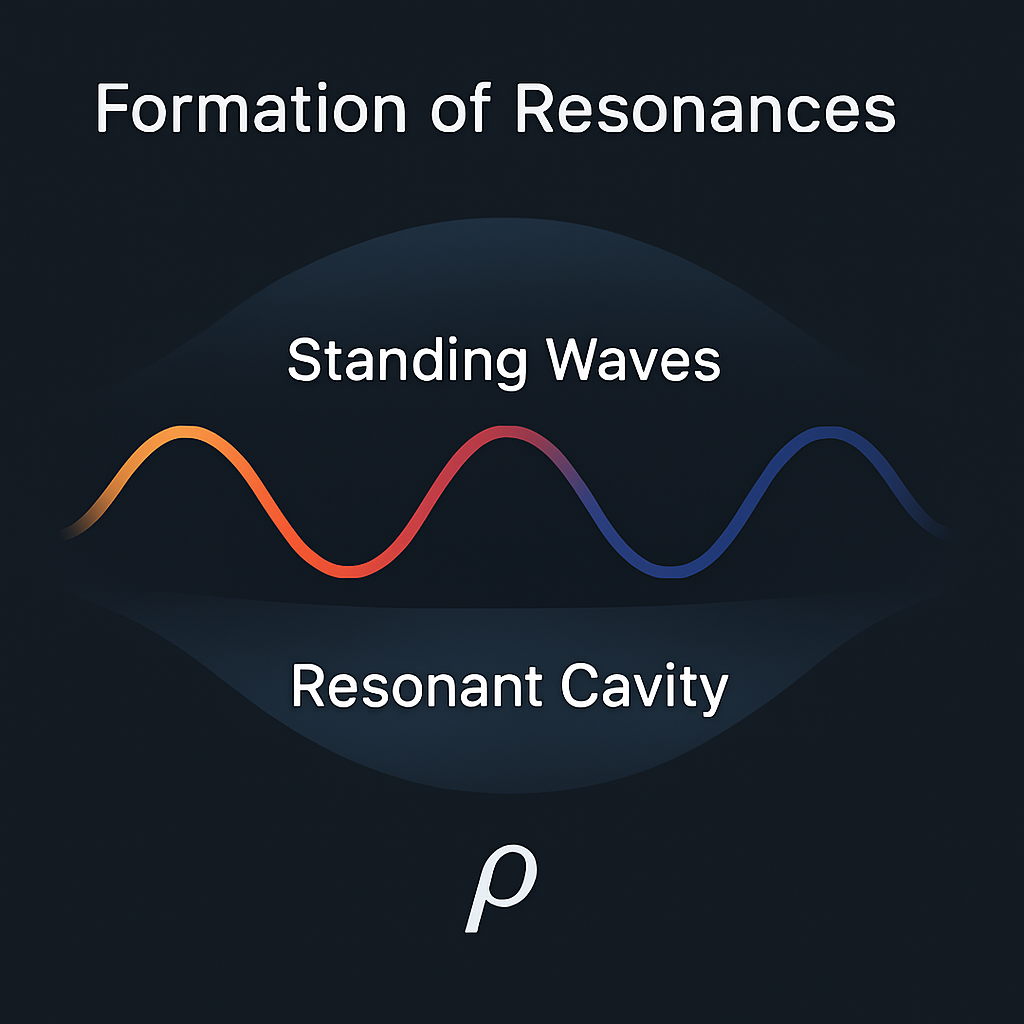
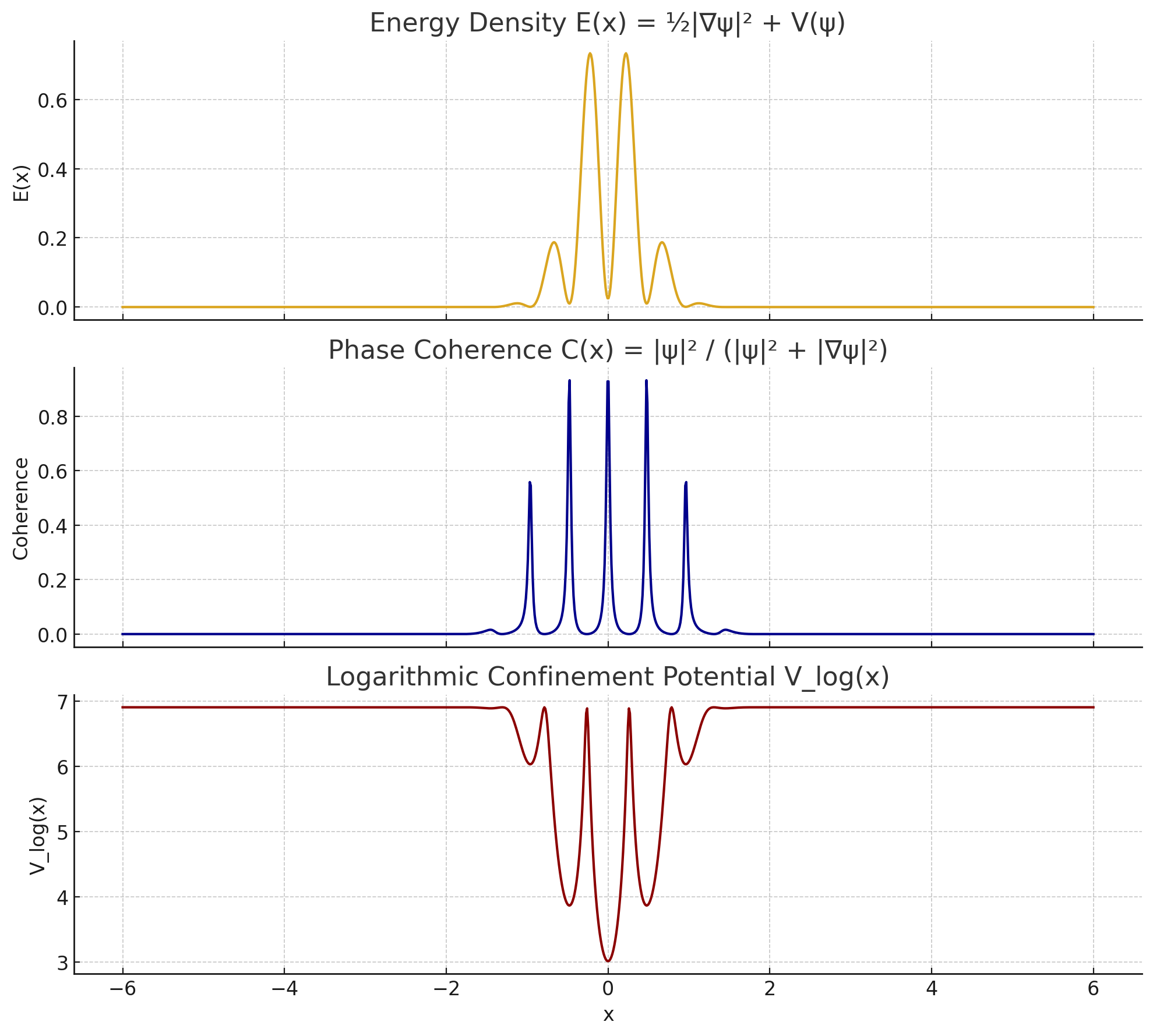
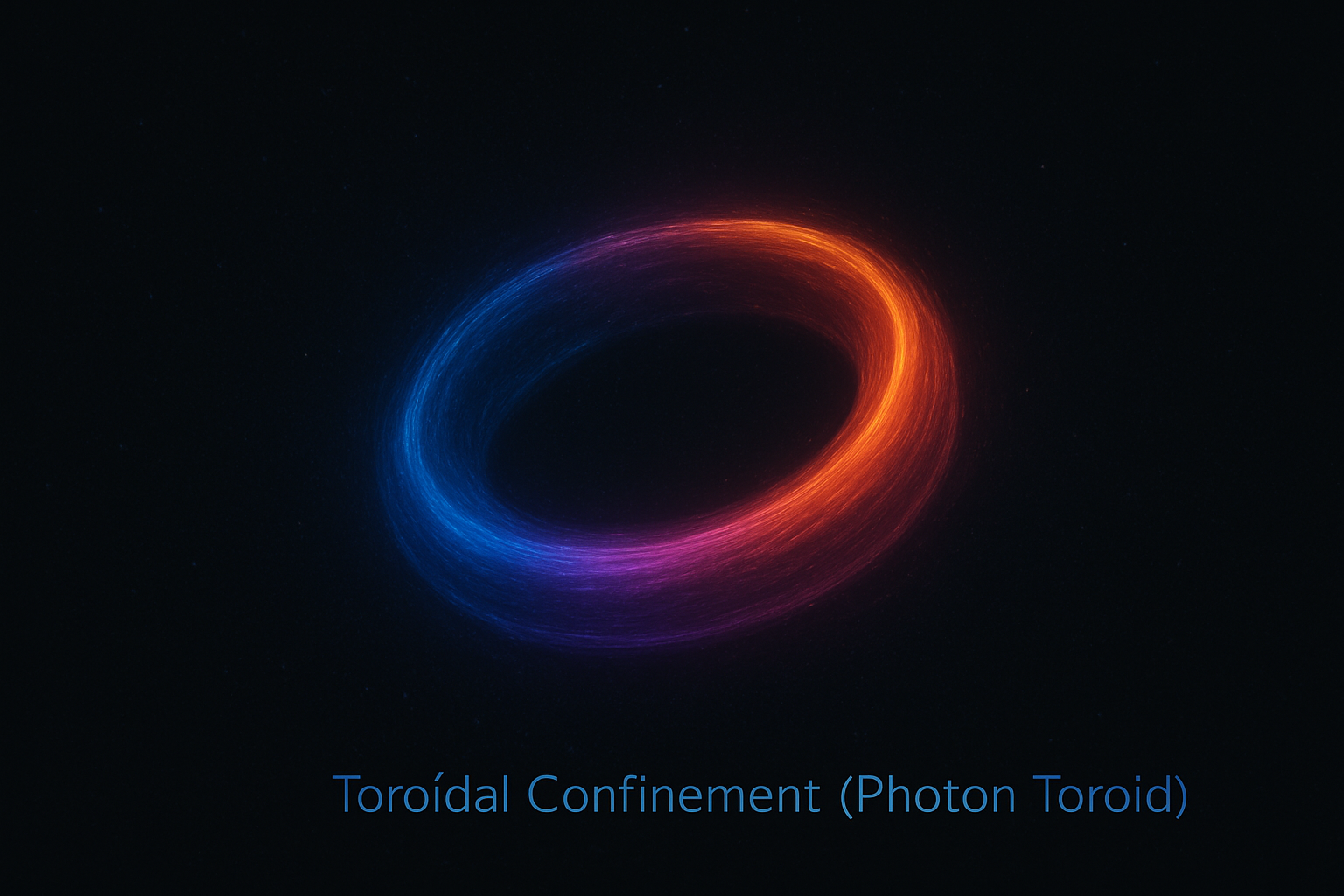
Boundary: illustrations explain the intended geometry; numerical and empirical claims are evaluated separately.
This website
Accessible plain-language summaries, research-status labels, and publication discovery.
Browse publicationsMachine-readable corpus
Stable equation IDs connected across canonical equations, SymPy, Lean, semantic graph records, and DOI sources.
Explore the corpusGitHub research hub
Equations, manuscripts, simulations, and the full technical archive of the program.
Opengeometry_of_resonance
Zenodo
Permanent DOI records and downloadable releases for every cited paper.
View archived worksStart here
Core overview · Foundational proposal
The main statement of WCT and its proposed emergence of mass, force, and effective spacetime geometry.
Axiomatic substrate · Foundational proposal
Observable energy density, flux, phase, conservation, finite-wavenumber selection, and shell formation.
Mass-locking proposal · Mathematical derivation
The cleanest formulation of the loop-curvature rest-energy ansatz.
Mathematical stability · Mathematical derivation
The argument that stable curvature-locked confinement is restricted to at most three spatial dimensions.
From theory to technology
WCT begins as a mathematical framework, but several branches are being explored as computational, photonic, memory, security, and control architectures. These are proposed application directions, not demonstrated commercial products.
Canonical equations, explicit assumptions, status labels, symbolic checks, and formal-support mappings define what the theory actually claims.
Simulations and diagnostics test finite-band selection, localization, phase organization, persistence, and failure modes.
Research branches explore persistent wave memory, drift detection, resonant references, coherent field generation, and related computational structures.
Reproducible source, experiments, public-data studies, patent filings, and open technical gaps provide separate paths for evaluation.
These areas are being investigated as consequences or engineering extensions of the underlying confinement and coherence ideas.
Current boundary: commercial performance, scaling advantage, production-scale hardware feasibility, and independent replication remain open.
Research branches
01 / Core
The central archive for equations, manuscripts, simulations, reading maps, experiments, and the current dependency structure of the program.
geometry_of_resonance →02 / Experiment
Raw oscilloscope waveform, FFT analysis, prediction ledger, ratio diagnostics, shuffle nulls, and explicit control requirements.
photodiode →03 / Atomic data
A reproducible line-density scan using public NIST Atomic Spectra Database exports, with Python and R implementations.
NIST analysis →04 / Collider data
Log-periodic residual tests, active-domain winding, Koide-like comb geometry, sideband controls, and veto-covariance diagnostics.
LHC analysis →05 / Computation
Experimental path-dependent commitments, one-time signatures, adversarial audits, and a prototype ledger. Not production cryptography.
Wavelock →06 / Architecture
Extensions of confinement and coherence concepts into AI architecture, recursive drift analysis, and diagnostics-driven fusion control.
Browse the publication archive →NIST: NIST is the public data provider only. No NIST endorsement, certification, or validation is claimed.
WaveLock: The current constructions are experimental research prototypes with documented security limitations and unresolved proof obligations.
Latest releases
All releases are authored by R. J. Reyes and linked to their archival Zenodo records.
A reproducible log-cosine line-density scan over public NIST Atomic Spectra Database exports, with null controls. NIST is the data provider only.
10.5281/zenodo.20435463
An open-data search for log-domain residual structure and Koide-like comb geometry, with sideband controls and explicit non-discovery caveats.
10.5281/zenodo.20164333
An audit of dated 2025 claims against later developments that separates chronology and partial support from direct validation.
10.5281/zenodo.20142976
The complete, searchable archive holds all 22 chronological releases with research-status labels, category and year filters, DOIs, and citation exports.
About
Richard J. Reyes is a controls engineer and software developer working in industrial refrigeration and process automation. His engineering work includes PLC logic, instrumentation, alarms, sequencing, networked HMIs, commissioning, and control-system troubleshooting.
He holds a B.S. in Computer Science from San José State University. His independent research spans nonlinear wave dynamics, mathematical physics, scientific computing, experimental signal analysis, public-dataset studies, computational architecture, and resonance-based control.
Contact and review